Cyber Toolkit Ltd, a UK Registered Company - 16938415
This is the Cyber Toolkit weekly roundup of key cyber security news, covering the most relevant vulnerabilities, breaches and incidents affecting organisations in the UK and beyond over the past week (28th July – 4th August 2026).
Broadcom has released emergency patches for three critical vulnerabilities affecting VMware ESXi, Workstation and Fusion that could allow attackers to bypass authentication, escape virtual machines and execute code on host systems. Virtualisation platforms remain attractive targets due to the access they provide across enterprise environments. Organisations using affected VMware products should prioritise applying security updates immediately, restrict administrative access to management interfaces and review systems for indicators of compromise.
Cisco has issued emergency hotfixes for an actively exploited zero-day vulnerability affecting Secure Firewall Management Center (FMC). The flaw, caused by hard-coded credentials, allows unauthenticated attackers to gain access to sensitive information and could be chained with other vulnerabilities to compromise firewall management infrastructure. Organisations running Cisco FMC should apply the latest hotfixes without delay, restrict internet exposure of management interfaces and review authentication logs for signs of unauthorised access.
A new industry report has revealed that 73% of organisations believe they are not adequately prepared to defend against AI-powered cyber attacks. As threat actors increasingly adopt artificial intelligence to automate phishing, vulnerability discovery and malware development, many security teams are struggling to keep pace. Organisations should ensure staff receive regular security awareness training, strengthen vulnerability detection and review incident response plans to account for emerging AI-enabled threats.
Google has released three Chrome security updates in quick succession, addressing more than 140 vulnerabilities, including several high-severity flaws that could allow remote code execution or compromise user data. With browsers continuing to represent one of the most common attack surfaces, organisations should ensure automatic updates are enabled wherever possible and verify that managed devices are running the latest supported version of Chrome.
The Police National Legal Database (PNLD), widely used by UK police forces and legal professionals, confirmed a cyber attack that resulted in sensitive operational and personal information being exposed. The incident highlights the continued targeting of organisations holding law enforcement and public sector data. Organisations should ensure sensitive information is appropriately segmented, apply least-privilege access controls and continuously monitor for suspicious activity across critical systems.
The UK Department for Education (DfE) has confirmed that a cyber attack exposed approximately 607,000 records containing sensitive information. While investigations remain ongoing, the breach serves as another reminder of the significant impact cyber incidents can have on public sector organisations responsible for large volumes of personal data. Public sector bodies should continue strengthening identity management, reviewing third-party access and ensuring sensitive datasets are adequately protected through encryption and robust access controls.
Security researchers have identified INC Ransomware as one of the most active ransomware operations targeting organisations in recent months, with attacks spanning healthcare, manufacturing, education and government sectors. The group continues to exploit unpatched internet-facing vulnerabilities to gain initial access before deploying ransomware and stealing sensitive data. Organisations should prioritise timely vulnerability management, implement multi-factor authentication across remote access services and maintain tested offline backups to reduce the impact of ransomware incidents.
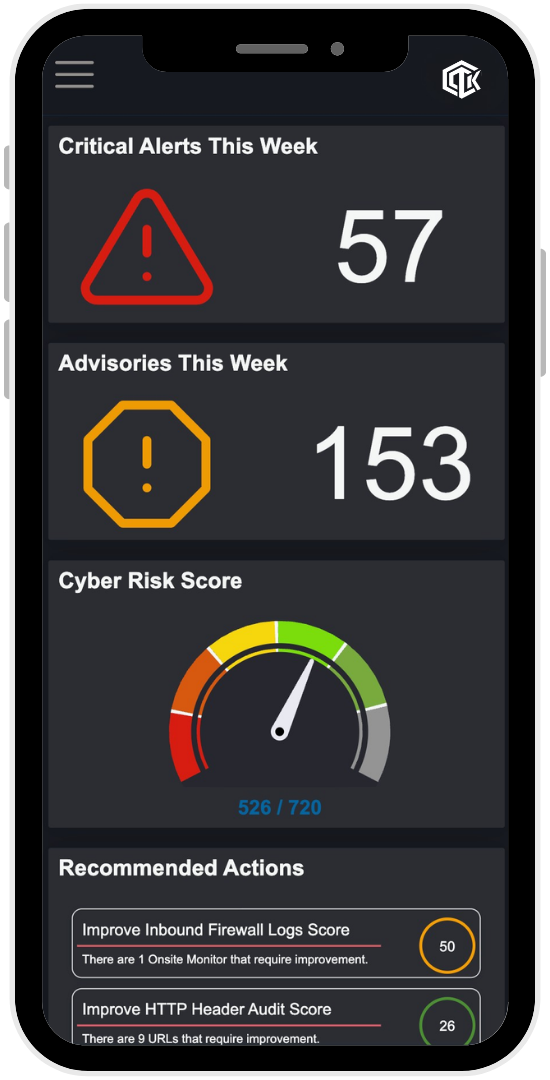
This week, Cyber Toolkit demonstrated its pivotal role by issuing 153 technical alerts, enabling organisations to stay ahead of emerging threats and respond promptly. Furthermore, our system identified 57 critical vulnerabilities across various systems. These figures highlight the importance of proactive measures and, as cyber threats continue to evolve, it is crucial for organisations to stay vigilant and utilise effective and FREE tools like Cyber Toolkit to manage their cyber security risks.
We'll see what next week brings.